
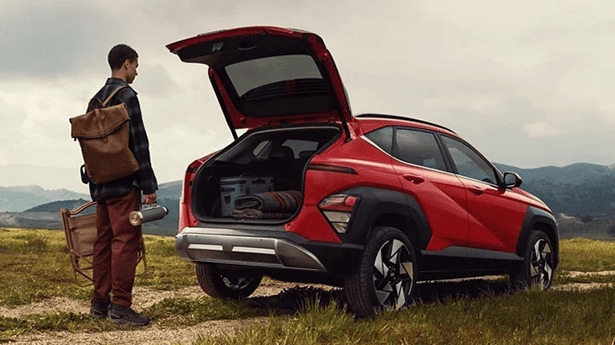
Choosing between the two smallest crossovers in the lineup isn't just about the monthly payment; it's about how much vehicle you actually need for your daily routine. The 2026 Hyundai Kona is positioned as a subcompact SUV that bridges the gap between entry-level affordability and the larger footprints of traditional family haulers. It offers a more mature driving experience with available HTRAC All Wheel Drive and a choice of two different engines. In contrast, the Hyundai Venue serves as the brand’s most accessible entry point, focusing on urban maneuverability and high value for those who want a brand-new vehicle with a full warranty without a steep price tag.
When walking shoppers through the lineup, we often notice that those who prioritize a commanding view of the road and a more substantial feel on the highway gravitate toward the Kona. Its design is futuristic and bold, using an EV-derived aesthetic that makes it stand out in any parking lot. The Venue, while smaller, uses its upright, boxy shape to maximize every inch of its footprint, making it a favorite for drivers who need to navigate tight spaces or older garages. Both vehicles come backed by America’s Best Warranty, including a 10-year/100,000-mile powertrain limited warranty that provides long-term peace of mind for original owners.
For those ready to see these models side-by-side, our Rockside Road showroom is conveniently located near the I-271 interchange, making it easy to stop in for a comparison. Whether you are looking for the extra capability of the Kona or the nimble nature of the Venue, our team is here to help you find the right fit. You can also reach us at (440) 745-7476 to check current availability or to ask specific questions about the latest features before you make the trip to Bedford.
Size and Dimensions: How the Kona and Venue Compare on the Road and in the Garage
The 2026 Kona measures 171.3 inches in length, which makes it about 12 inches longer than the 159.1-inch Venue. This difference is most noticeable when you step into the second row or open the liftgate. The Kona offers about 26 cubic feet of cargo space behind the rear seats, expanding to a generous about 64 cubic feet when you fold the seats flat. This makes the Kona a viable option for small families or weekend adventurers who need to carry strollers, camping gear, or large grocery hauls. The Venue provides about 19 cubic feet of space behind the seats and roughly 32 cubic feet total, which is perfectly suited for daily errands and commuting.
Dimensions & Capacity
| Feature | Standard across all trims |
|---|---|
| Seating Capacity | 5 |
| Length | 171.3 |
| Width | 71.9 |
| Height | 62.2 |
In Cleveland, where street parking and narrow alleyways are common, the Venue's shorter wheelbase and 33.2-foot turning diameter give it a distinct advantage. It can slip into parking spots that larger SUVs have to pass by. However, the Kona’s wider stance and longer 104.7-inch wheelbase provide a more settled ride on the highway, especially during the windy winter months near the lake. The Kona also offers a higher ground clearance, reaching up to 8.3 inches on certain trims, compared to the 6.7 inches found on the Venue. This extra height can be a deciding factor for those who frequently deal with unplowed side streets or gravel paths.
Inside the cabin, the Kona provides significantly more rear legroom, measuring 38.2 inches compared to the 34.3 inches in the Venue. If you regularly have adult passengers in the back or need to install a rear-facing child seat, the Kona’s extra foot of length makes a substantial difference in comfort. For shoppers who are considering a used model to save even more, we also carry a variety of pre-owned Hyundai models that offer these same space-saving benefits at a different price point.
Engine Specs and Road Performance: Powering Your Daily Commute
Performance expectations often dictate which of these small SUVs is the better fit for your lifestyle. The 2026 Kona offers two distinct powertrains depending on the trim level you choose. The SE and SEL Sport trims feature a 2.0L I4 engine producing 147 hp and 132 lb-ft of torque, paired with an Intelligent Variable Transmission (CVT). This setup is designed for efficiency and smooth city driving. For those who want more spirit on the highway, the SEL Premium and Limited trims upgrade to a 1.6L I4 turbocharged engine that delivers 190 hp and 195 lb-ft of torque, mated to an 8-speed automatic transmission.
Engine & Performance
Powertrain specifications across trim levels
| Feature | SE | SEL Sport | SEL Premium | Limited |
|---|---|---|---|---|
| Engine | 2.0L I4 | 2.0L I4 | 1.6L I4 | 1.6L I4 |
| Transmission | CVT | CVT | Automatic | Automatic |
| Drivetrain | FWD | FWD | FWD | HTRAC AWD |
The Venue keeps things simple with a single engine choice across its lineup: a 1.6L I4 that generates 121 hp and 113 lb-ft of torque. While these numbers are lower than the Kona's, the Venue is also several hundred pounds lighter, which helps it feel responsive during stop-and-go city driving. However, it is important to note that the Venue is strictly front-wheel drive. If your commute involves the rolling hills or heavy snow common in Northeast Ohio, the Kona’s available HTRAC All Wheel Drive provides the extra traction needed to move forward with confidence when conditions turn slick.
Fuel economy remains a strong suit for both models. The Kona with the base engine and front-wheel drive achieves an EPA-estimated 30 city / 35 hwy MPG. The Venue is similarly efficient, offering an EPA-estimated 29 city / 32 hwy MPG. While the Venue is excellent for staying within a tight fuel budget, the Kona’s larger fuel tank—up to about 13 gallons on higher trims compared to the Venue’s about 12 gallons—means you can go longer between fill-ups during long-distance trips.
Interior Comfort, Tech, and Premium Features
Step inside the cabin and the first thing you'll notice is how Hyundai has prioritized high-end technology even on the entry-level models. The 2026 Kona comes standard with a massive 12.3-inch touchscreen display that includes wireless Android Auto and Apple CarPlay integration. Higher trims like the Limited further enhance the experience with a matching 12.3-inch digital gauge cluster, creating a seamless glass cockpit feel that was previously reserved for luxury vehicles. The interior also features a larger console tray for 2026, providing more room for smartphones, keys, and daily essentials.
The Venue’s interior is focused on ergonomic simplicity and durability. It features an 8-inch touchscreen that is easy to reach and operate while driving. While it doesn't offer the sprawling digital real estate of the Kona, it still provides the essential connectivity features that modern drivers expect. The Venue uses high-quality cloth seating and intuitive physical knobs for climate control, making it a very user-friendly environment for first-time buyers or those who prefer a more traditional layout.
For those seeking a more premium feel, the Kona offers several upgrades that aren't available on the Venue. These include H-Tex leatherette-trimmed seats, ventilated front seats, and ambient interior lighting with 64 colors to choose from. The Kona Limited even includes a Bose Premium Audio system with eight speakers and a Hands-free smart liftgate. Families test-driving the Kona usually ask about the rear seat room before they even look at the window sticker, as the extra width makes it much easier to fit three passengers across the back compared to the more intimate cabin of the Venue.
Pricing, Trims, and Total Value for Savvy Buyers
The 2026 Kona lineup has been streamlined to help buyers more easily identify the right feature set for their budget. The entry-level SE starts at $28,115 and comes surprisingly well-equipped with Smart Cruise Control with Stop & Go and LED Projector Combination headlights. Moving up to the SEL Sport at $29,986 adds style-focused elements like 18-inch black wheels and a gloss black spoiler. The SEL Premium is priced at $31,930 and introduces the more powerful turbo engine, while the range-topping Limited at $36,350 includes advanced tech like the Surround View Monitor and Blind-Spot View Monitor.
Pricing
MSRP and destination charges (source: MarketCheck VIN Decode (consensus))
| Feature | SE | SEL Sport | SEL Premium | Limited |
|---|---|---|---|---|
| Starting MSRP | $28,115 | $29,986 | $31,930 | $36,350 |
Lowest starting MSRP: SE at $28,115
Because the Venue is positioned as the most affordable crossover in the family, its pricing sits significantly lower than the Kona's. This makes it an ideal choice for students, city dwellers, or anyone looking to minimize their monthly car payment while still enjoying the benefits of a new vehicle warranty. While the Venue lacks the turbocharged engine and all-wheel-drive options of the Kona, its lower starting price allows many buyers to opt for the top-tier Limited trim while still spending less than they would on a base-model Kona.
We invite you to browse our current new inventory to see the latest color options and trim configurations available today. If you have a specific budget in mind, you can also get a head start on the process by completing our online finance application from the comfort of your home. Our team is committed to transparency, and we will work with you to find a payment plan that fits your financial goals without any high-pressure tactics.
Quick Answers Before You Visit
Q: Does the 2026 Hyundai Venue offer all-wheel drive?
The Venue is exclusively a front-wheel-drive vehicle. If you require the added traction of all-wheel drive for winter weather, the Kona offers HTRAC All Wheel Drive as an available option on every trim level.
Q: Which model is easier to park in tight urban spots?
The Venue is roughly a foot shorter than the Kona and has a tighter turning radius, making it the superior choice for frequent city parking. However, the Kona Limited offers a Surround View Monitor and Remote Smart Parking Assist to help navigate tight spaces.
Q: Can the Kona tow a small trailer?
While the Kona is a capable small SUV, it is not rated for significant towing. It is best suited for carrying gear on its roof rails or using a hitch-mounted bike rack. We recommend checking your owner's manual for specific weight limits before attaching any equipment.
Q: What are the main safety features included as standard?
Both vehicles come standard with Forward Collision-Avoidance Assist, Lane Keeping Assist, and Driver Attention Warning. The 2026 Kona adds standard Smart Cruise Control with Stop & Go and automatic emergency braking with junction turning detection across all trims.
Q: How does the warranty coverage work for these models?
Both models come with a 5-year/60,000-mile new vehicle limited warranty and a 10-year/100,000-mile powertrain limited warranty. Additionally, you receive five years of 24/7 Roadside Assistance with no mileage limit. If you need assistance, you can reach Hyundai Roadside Assistance: 800-243-7766.
Prices and MSRP referenced in this article are estimates for informational purposes only and do not constitute an offer to sell. See dealer for complete details. Fuel economy estimates shown may differ from official EPA ratings and should not be relied upon as a guarantee of actual vehicle performance.


