
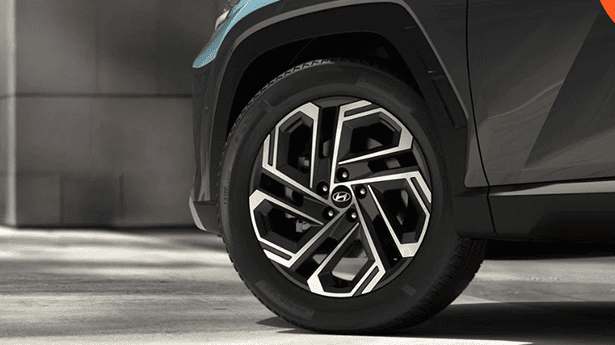
Cold weather triggers your tire pressure light because air contracts when temperature drops, reducing the pressure inside your tires by roughly 1 psi for every 10°F drop in ambient temperature. Over a sudden cold spell, that natural contraction can push an already borderline tire below your vehicle's Tire Pressure Monitoring System (TPMS) warning threshold, even if your tires have no leaks or punctures.
When autumn temperatures drop sharply across Northeast Ohio, drivers often wake up to an illuminated amber horseshoe symbol on the instrument cluster. This warning symbol lights up when sensor measurements indicate that a tire has fallen approximately 25% below the manufacturer's recommended cold inflation pressure. A tire that was set to 32 psi during a warm summer afternoon can easily drop to 28 psi or lower when overnight temperatures plummet toward freezing.
Understanding why this happens helps eliminate winter morning panic. The air trapped inside your tires responds directly to ambient temperature changes. As outside temperatures decline, the air molecules inside the tire slow down and pack closer together, exerting less outward force against the rubber inner walls. Because the volume of air inside the tire remains sealed, this physical contraction shows up directly as a loss of inflation pressure on a pressure gauge or digital display.
If your dashboard warning illuminates on a chilly morning, you can visit our Bedford service center or call our service team at (440) 745-7476 for a quick check. Keeping your tires properly inflated protects your tire tread, preserves fuel efficiency on your daily commute along Interstate 271, and ensures optimal vehicle handling on slick winter pavement.
Why Does Tire Pressure Drop When the Temperature Drops?
Tire pressure drops in cold weather because air molecules lose thermal energy and contract, occupying less volume inside the sealed tire cavity. This physical contraction decreases the force exerted against the inner tire liner, resulting in lower measured gauge pressure without any air escaping through a valve stem or puncture.
The relationship between temperature and air pressure follows basic physical laws. For every 10°F drop in outside air temperature, tire pressure decreases by approximately 1 psi. When seasons transition from warm summer months to freezing winter days, a temperature drop of 30°F can cause a tire to lose around 3 psi of inflation pressure purely due to environmental changes.
Driving on underinflated tires creates several safety and maintenance concerns:
- Increased rolling resistance, which reduces fuel efficiency on daily drives.
- Excessive heat buildup along the tire shoulders, accelerating outer tread wear.
- Reduced steering responsiveness and impaired braking performance on wet or icy roads.
- Greater vulnerability to wheel and tire damage when hitting winter potholes.
Drivers heading into our service lane during autumn cold snaps frequently ask why all four tires lost air at the exact same time. When every tire shows a simultaneous drop in pressure during a freeze, seasonal temperature change is almost always the cause. If you need replacement valve caps, tire gauges, or winter wheel accessories, our Hyundai parts department stocks factory-approved components designed for your specific vehicle.
Maintaining correct pressure is especially critical for vehicles equipped with advanced all-wheel-drive systems, such as the 2026 Hyundai Tucson or 2026 Hyundai Santa Fe, where consistent rolling circumferences across all four wheels ensure smooth power distribution and protect drivetrain components.
Should You Overinflate Your Tires Before a Major Cold Freeze?
You should never intentionally overinflate your tires above the manufacturer's recommended cold pressure threshold before a freeze. Overinflating stiffens the ride, shrinks the tire's contact patch with the road, and causes premature tread wear along the center of the tread.
Some drivers attempt to prevent cold-weather pressure drops by adding extra air before an incoming winter storm. However, adding excess pressure creates distinct driving hazards. An overinflated tire becomes overly rigid, reducing its ability to absorb road impacts and decreasing traction on slippery surfaces where a full, pliable contact patch is essential for grip.
Instead of overinflating beforehand, the proper strategy is to check pressure regularly when the tires are cold and adjust inflation precisely to the specification listed on your vehicle's safety placard. Checking pressure first thing in the morning—before driving or after the vehicle has been parked for at least three hours—ensures your adjustment accounts for current ambient temperatures without exceeding safety limits.
The maximum inflation pressure stamped into a tire's rubber sidewall is not a target setting; it represents the absolute ceiling the tire can safely hold under maximum load weight. Exceeding your vehicle placard specification alters handling dynamics and compromises safety tech features like blind-spot monitoring and stability control by altering tire traction behavior.
Where to Find Your Recommended PSI Rating for Winter Driving
Your vehicle's correct recommended cold tire pressure is printed on the safety tire information placard inside the driver-side door jamb and in your owner's manual. It is never the maximum pressure molded into the tire sidewall, which indicates the maximum load capacity for the tire unit itself.
When opening the driver door, you will locate a white and yellow vehicle certification label affixed to the door pillar. This label provides specific pressure values measured in pounds per square inch ( psi) tailored to your model's weight distribution, suspension tuning, and factory wheel dimensions.
Key details found on the door jamb placard include:
- Recommended cold pressure for the front tires.
- Recommended cold pressure for the rear tires.
- Inflation targets for the compact spare tire, if equipped.
- Original equipment tire dimensions and load index ratings.
Vehicle manufacturers set inflation targets based on cold measurements. Hyundai specifies uniform baseline cold pressure targets regardless of whether you drive a front-wheel-drive sedan or an all-wheel-drive SUV. While cold weather decreases actual tire pressure, your target pressure number does not change between winter and summer. You simply need to add air during cold weather to bring the chilling air back up to the manufacturer's specified cold baseline.
Do not forget to inspect your spare tire during monthly pressure checks. Full-size and compact spare tires lose air over time due to temperature fluctuations, and a flat spare provides zero help during a roadside emergency.
How Can You Tell If a TPMS Light Means Low Pressure vs. a System Fault?
A TPMS light that turns on solid indicates low tire pressure in one or more tires, while a light that flashes for roughly 60 seconds at start-up before staying solid signals a system malfunction or a dead sensor battery.
Recognizing the difference between a low-pressure alert and a system fault saves time and clarifies the necessary corrective steps:
- Solid Amber TPMS Light: One or more tires have dropped roughly 25% below recommended cold pressure. The system is actively monitoring and advising you to check and add air as soon as possible.
- Flashing TPMS Light: The warning symbol flashes for one minute when starting the engine and then remains lit continuously. This indicates that the control module has lost communication with one or more wheel sensors, often due to a dead internal sensor battery, wheel sensor damage, or electronic interference.
- Intermittent TPMS Light: The light turns on during cold mornings and turns off after 15 to 20 minutes of highway driving. Frictional heat from road contact warms the air inside the tire, temporarily raising pressure back above the alert trigger point.
While an intermittent light might make it seem like the issue resolved itself, the underlying cold inflation pressure remains low. Once the tire cools down after parking, the pressure drops back down, triggering the light again the following morning. The proper fix is to measure tire pressure while cold and inflate the tire to the recommended placard PSI.
If your warning light continues flashing after start-up, certified technicians can scan your system diagnostic codes, test sensor battery life, and replace faulty wheel sensors using genuine diagnostic tools.
How Should You Check and Correct Tire Pressure in Cold Weather?
Check and adjust your tire pressure when the tires are cold, meaning the vehicle has been parked for at least three hours or driven less than one mile at low speed. Use an accurate tire pressure gauge, inflate to the door jamb placard figure, and recheck pressure after significant temperature swings.
When cold air blowing off Lake Erie brings sudden overnight freezes to Cleveland, taking a structured approach to tire care ensures accurate inflation measurements.
Follow these steps to check and top off your tires accurately:
- Park on a Level Surface: Ensure the vehicle is parked safely on flat ground after sitting cold overnight or for at least three hours.
- Locate Placard PSI: Open the driver door to read the precise recommended cold pressure figures for your front and rear axles.
- Measure Cold Pressure: Remove the valve stem cap and press an accurate digital or dial tire gauge firmly onto the valve to record the current reading.
- Add Air as Needed: Use an air compressor to add air in short bursts, checking with your pressure gauge between fills until reaching the placard target.
- Recheck All Four Tires: Measure every tire on the vehicle, including the spare tire, to ensure consistent inflation across all wheels.
- Replace Valve Caps: Securely screw valve stem caps back on to protect internal valve cores from moisture, dirt, and road salt corrosion.
If your vehicle features a direct TPMS display on the digital gauge cluster or easy-to-use touchscreen, drive the car for a short distance at speeds above 15 mph to allow the wheel sensors to update their live pressure readings and clear the instrument panel warning light.
Common Questions About Winter Tire Pressure and TPMS Operation
Q: Will the tire pressure light turn off by itself after driving in cold weather?
The light may turn off after driving because friction between the tires and the road generates heat, causing the air inside to expand and temporarily raise tire pressure above the warning threshold. However, once the vehicle is parked and the tires cool back down, the air contracts and the warning light returns. You should measure pressure when the tires are cold and add air until reaching your vehicle's recommended placard rating.
Q: How many PSI does a tire lose for every 10 degree drop in temperature?
Tires lose approximately 1 psi of inflation pressure for every 10°F drop in ambient air temperature. A sudden autumn or winter temperature drop of 20°F can cause your tires to lose about 2 psi, which is often enough to trigger your TPMS warning light if your pressure was already slightly low.
Q: Does a tire pressure light mean the tires are only slightly low?
No, a illuminated TPMS warning symbol is a late-stage safety alert rather than an early reminder. Federal safety standards require the system to warn drivers only when a tire reaches approximately 25% below the vehicle manufacturer's recommended cold pressure. By the time the warning light turns on, your tire is significantly underinflated and requires immediate attention.
Q: Is the recommended tire pressure different for winter driving versus summer driving?
Your vehicle's recommended cold tire pressure target remains the same year-round. The figure printed on your driver-side door jamb placard represents the optimal cold pressure for year-round safety, traction, and tire longevity. You do not change your target PSI for winter; you simply need to add air more frequently during cold weather to maintain that target against ambient pressure loss.
Q: Why does the TPMS light turn on during cold mornings but turn off in the afternoon?
Morning temperatures are typically the lowest of the day, causing air inside the tire to contract to its lowest pressure point and trigger the sensor. As afternoon ambient temperatures rise and normal driving warms the tire, the air expands slightly, raising internal pressure back above the alert cutoff. Checking and filling your tires while cold in the morning prevents this cycling.
Prices and MSRP referenced in this article are estimates for informational purposes only and do not constitute an offer to sell. See dealer for complete details. Fuel economy estimates shown may differ from official EPA ratings and should not be relied upon as a guarantee of actual vehicle performance.


