
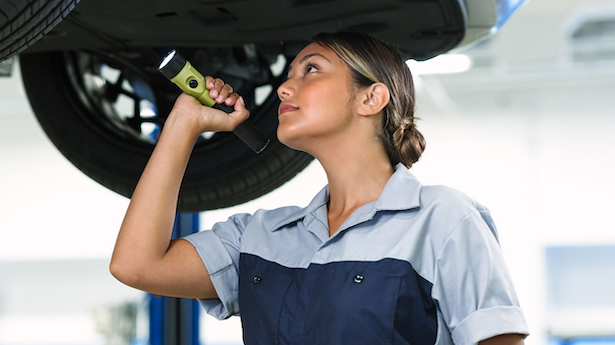
Shaking or vibration while applying the brakes is primarily caused by disc thickness variation across the brake rotors, uneven friction-material deposits, sticking brake calipers, or worn front suspension components. When brake pads press against irregular rotor surfaces or loose steering linkages shift under load, physical oscillations ripple back through the brake pedal, chassis, and steering column.
A vehicle experiencing braking pulsation requires systematic inspection of the friction surfaces, hydraulic calipers, and steering geometry to isolate the exact cause. While driver intuition often points to "warped rotors," true thermal warping of heavy cast-iron rotors is relatively rare. More often, intense thermal stress during repeated hard stops creates uneven pad material transfer onto the rotor faces. This creates microscopic high and low spots across the disc face. As the pads clamp down during deceleration, variations as small as a fraction of a millimeter cause noticeable shuddering.
Drivers executing daily suburban commutes along Interstate 271 around Bedford often notice this shuddering when slowing down from highway speeds on hilly exit ramps. Extended coasting down grades with steady brake pedal application generates sustained friction heat, accelerating friction material buildup on the rotors.
Ignoring a vibration during braking compromises stopping efficiency and accelerates wear on adjacent components like wheel bearings and control arm bushings. If your vehicle exhibits severe shuddering or pulls to one side when stopping, give our service team a quick call or visit our location directly by getting directions to our Bedford service center on Rockside Road.
What Does It Mean If Only the Steering Wheel or Brake Pedal Shakes?
A vibration isolated strictly to the steering wheel during braking points to front-end issues such as front brake rotor thickness variation, worn tie rod ends, or imbalanced front tires, whereas a pulsating brake pedal without steering wheel movement typically indicates rear brake rotor or drum irregularities.
Isolating where the vibration enters the cabin helps narrow down which wheel assembly requires mechanical attention:
- Steering wheel vibration only: Indicates the disturbance originates in the front hub assemblies. As the front calipers compress against uneven front rotors, the resulting lateral motion transfers directly through the steering knuckles, tie rods, and rack-and-pinion assembly into the steering wheel.
- Brake pedal pulsation only: Points to rear brake components. Because the rear wheels do not turn with steering input, mechanical pulses travel through the hydraulic brake lines and pedal linkage directly into the driver's foot.
- Whole-vehicle cabin vibration: Occurs when both front and rear rotors suffer from severe thickness variation, or when a brake caliper has partially seized, causing constant asymmetric friction drag across the entire chassis.
Technicians on our service floor frequently observe that drivers notice front rotor issues first during high-speed highway slowing, where kinetic energy conversion into thermal energy is at its highest. During routine multi-point checks, inspecting pad wear patterns side-by-side helps verify whether the caliper slides are moving evenly. When replacing worn friction components, using Hyundai genuine brake parts ensures proper pad material composition and precise disc dimensions engineered for your specific model.
How Rotors, Worn Pads, and Seized Calipers Cause Brake Vibration
Brake rotors develop uneven thickness and friction variations primarily through intense heat cycles and uneven pad material transfer rather than physical warping, while seized caliper slide pins hold pads against the rotor continuously, creating excessive heat and aggressive shuddering.
The braking system relies on precise mechanical tolerances to convert vehicle momentum into heat. When any component within the wheel end strays from manufacturer specifications, vibration is the immediate result:
- Disc Thickness Variation (DTV): Over thousands of miles, subtle variances in rotor thickness develop across the friction ring. When pad pressure hits a thick section, fluid pressure spikes slightly in the hydraulic line; when it hits a thin section, pressure drops. This cycle repeats hundreds of times per minute, creating a pulsation felt through the pedal.
- Lateral Runout: Refers to a rotor that wobbles side-to-side as it spins on the hub shaft, often caused by improper lug nut torque during tire service or rust accumulation between the rotor hat and wheel hub flange.
- Uneven Pad Material Transfer: Stopping abruptly after high-speed driving and holding the brake pedal down clamps red-hot pads against a stationary rotor. Microscopic layers of pad friction material stick to that single spot on the disc face, creating a region with a different coefficient of friction than the rest of the rotor.
- Sticking Caliper Slide Pins and Pistons: Hydraulic calipers must slide freely on greased guide pins. If corrosion or dried grease binds a slide pin, one pad stays in continuous contact with the rotor face. This drag generates extreme localized heat, glazes the pad surface, and causes rapid, asymmetric rotor wear.
Proper diagnosis involves mounting a mechanical dial indicator to measure lateral runout down to thousandths of an inch, alongside a precision micrometer to measure disc thickness variation at multiple points around the rotor circumference.
Can Worn Tires, Misalignment, or Loose Suspension Cause Shaking When Braking?
Worn tires, misaligned wheels, loose ball joints, and deteriorated control arm bushings frequently cause or amplify shaking when braking, because deceleration shifts vehicle weight forward and loads front suspension joints, exaggerating existing mechanical play or tire tread irregularities.
While brake rotors and calipers are the primary suspects, non-brake components contribute significantly to deceleration vibrations:
- Forward Weight Transfer: Applying the brakes causes the vehicle's center of gravity to shift forward, compressing the front struts and loading the front control arms. If rubber suspension bushings are cracked or softened from age, the front wheels move fore and aft under braking force, creating a rapid vibration.
- Worn Ball Joints and Tie Rod Ends: Any looseness in steering ball joints allows the front wheels to flutter when subjected to heavy braking torque, transmitting severe shaking up through the steering column.
- Uneven Tire Wear and Imbalance: An unbalanced tire or one with cupped tread patterns may feel reasonably smooth at constant speeds, but once heavy front weight transfer occurs during braking, the uneven tread contact patch causes dynamic hopping.
Urban driving near the Lake Erie waterfront in Cleveland, with frequent stop-and-go cycles and road surface transitions near bridge decks, places consistent stress on front suspension geometry. When suspension bushings lose structural stiffness, even microscopic rotor runout that would normally go unnoticed transforms into a strong steering wheel shake.
Common Questions About Vehicle Shaking and Brake Diagnostics
Q: How do technicians determine if brake rotors need resurfacing or full replacement?
A: Technicians use a precision micrometer to measure disc thickness across several points on the rotor ring and check the result against the manufacturer's minimum thickness specification stamped into the rotor casting. If the rotor has sufficient remaining material above the discard limit and lateral runout is within tolerance, it can be resurfaced on a precision brake lathe to restore a flat surface. If resurfacing would reduce rotor thickness below safety limits, full replacement is required.
Q: Is it safe to continue driving if my car shakes when applying the brakes?
A: Driving with brake vibration is not recommended because it signals compromised friction contact and reduced stopping effectiveness. Severe pulsation increases stopping distances, accelerates wear on steering tie rods and wheel bearings, and can indicate a sticking caliper that risks overheating the brake fluid. Prompt inspection ensures your braking system maintains optimal hydraulic pressure and stopping control under sudden emergency stops.
Q: Can improper lug nut tightening cause steering wheel vibration during braking?
A: Yes, tightening wheel lug nuts unevenly or over-torquing them with an impact wrench can distort the brake rotor hat against the wheel hub. This distortion creates artificial lateral runout in the rotor face, leading to uneven pad wear and a noticeable steering wheel shudder within a few hundred miles of service. Technicians always use a calibrated torque wrench to ensure even clamping pressure across all wheel studs.
Q: Why does my brake pedal vibrate only during hard emergency stops?
A: A rapid, chatter-like pulsation in the brake pedal during hard braking on slippery surfaces or during sudden stops is typically the Anti-lock Braking System (ABS) activating normally. The ABS system rapidly cycles hydraulic pressure to prevent wheel lockup and maintain steering control. However, if pedal vibration occurs during normal, gentle slowing on clear, dry roads, it indicates mechanical rotor thickness variation rather than ABS intervention.
Q: What is the difference between brake rotor resurfacing and bedding new pads?
A: Rotor resurfacing is a machining process that removes a thin outer layer of metal to eliminate scoring, runout, and uneven friction deposits from an existing rotor. Bedding new pads is a controlled heating sequence performed after installing new friction components to transfer a thin, uniform layer of pad material onto the rotor surface, establishing optimal chemical bonding and preventing future vibration.
Schedule Certified Hyundai Brake Inspection and Repair in Bedford
Resolving brake vibrations promptly preserves stopping performance and protects your vehicle's steering and suspension components from premature wear. Our factory-trained service team relies on specialized diagnostic tools, including precision dial indicators and micrometers, to pinpoint whether your vehicle's vibration stems from rotor thickness variation, sticking caliper slides, or front suspension play.
Every service visit at our dealership includes a comprehensive multi-point inspection of your pad thickness, rotor runout, hydraulic lines, and fluid condition. We use genuine OEM components designed to match your model's exact engineering standards.
When you notice pedal pulsing or steering wheel vibration during your daily drive, you can easily schedule your brake inspection online in just a few clicks. You can also give our service advisors a call directly at (440) 745-7476 or drop by our service center on Rockside Road to ensure your vehicle remains safe, quiet, and reliable on every trip.
Prices and MSRP referenced in this article are estimates for informational purposes only and do not constitute an offer to sell. See dealer for complete details. Fuel economy estimates shown may differ from official EPA ratings and should not be relied upon as a guarantee of actual vehicle performance.


